
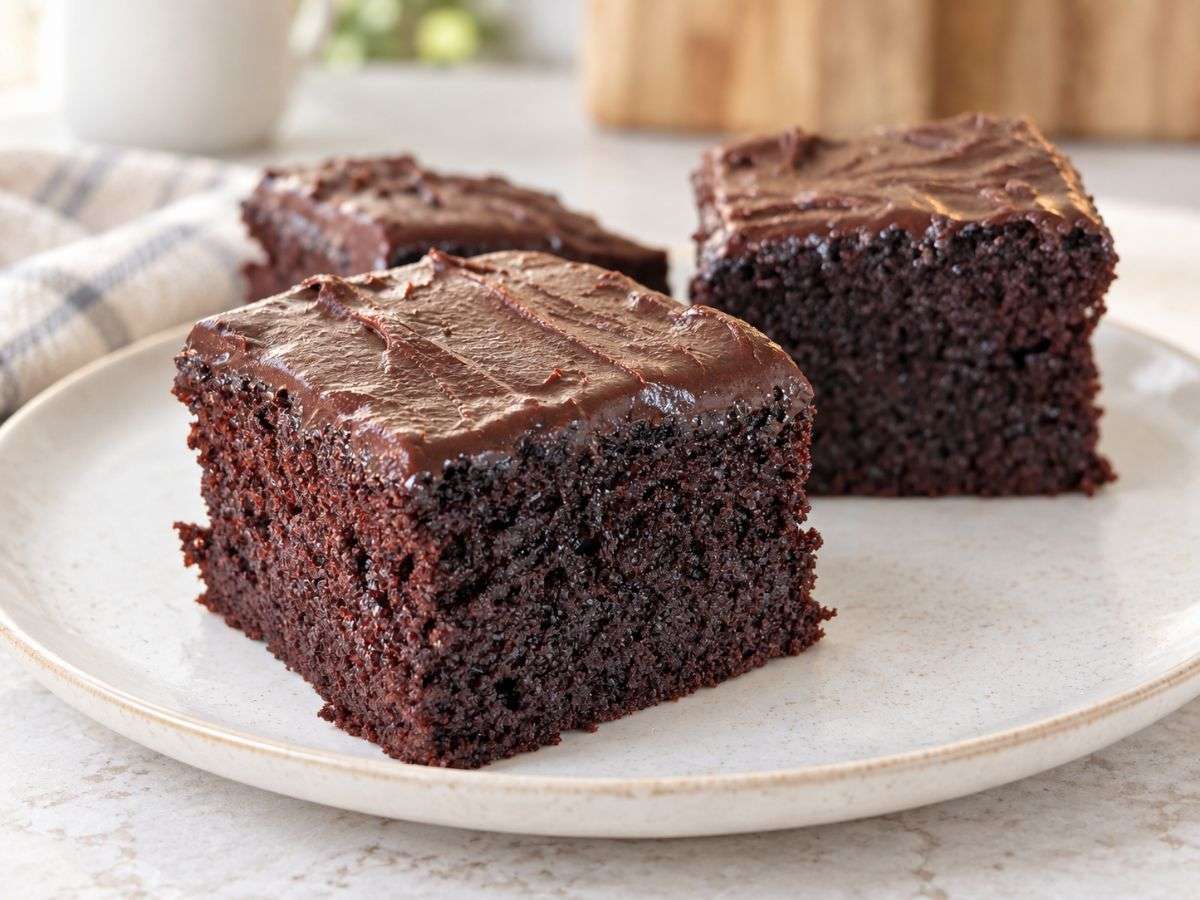
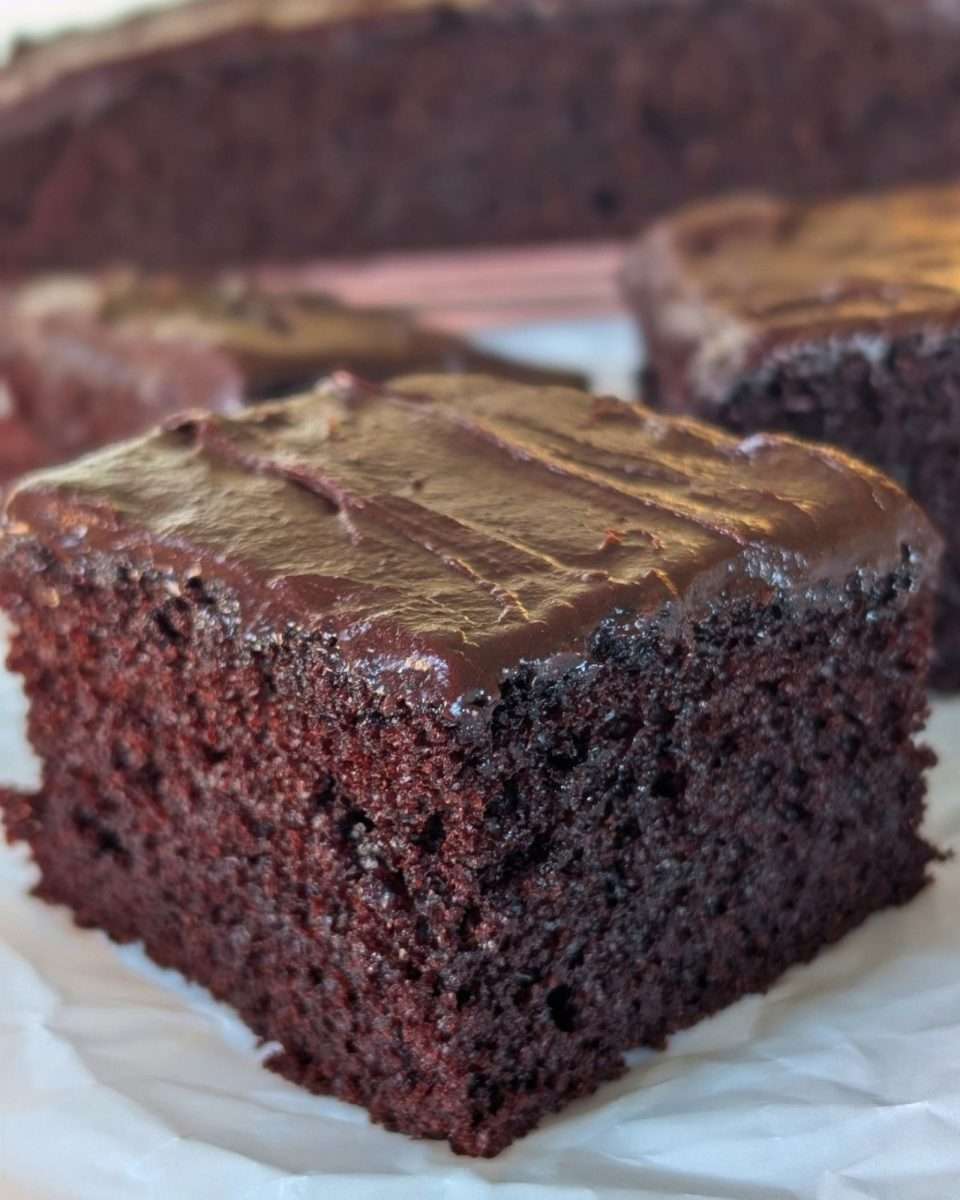
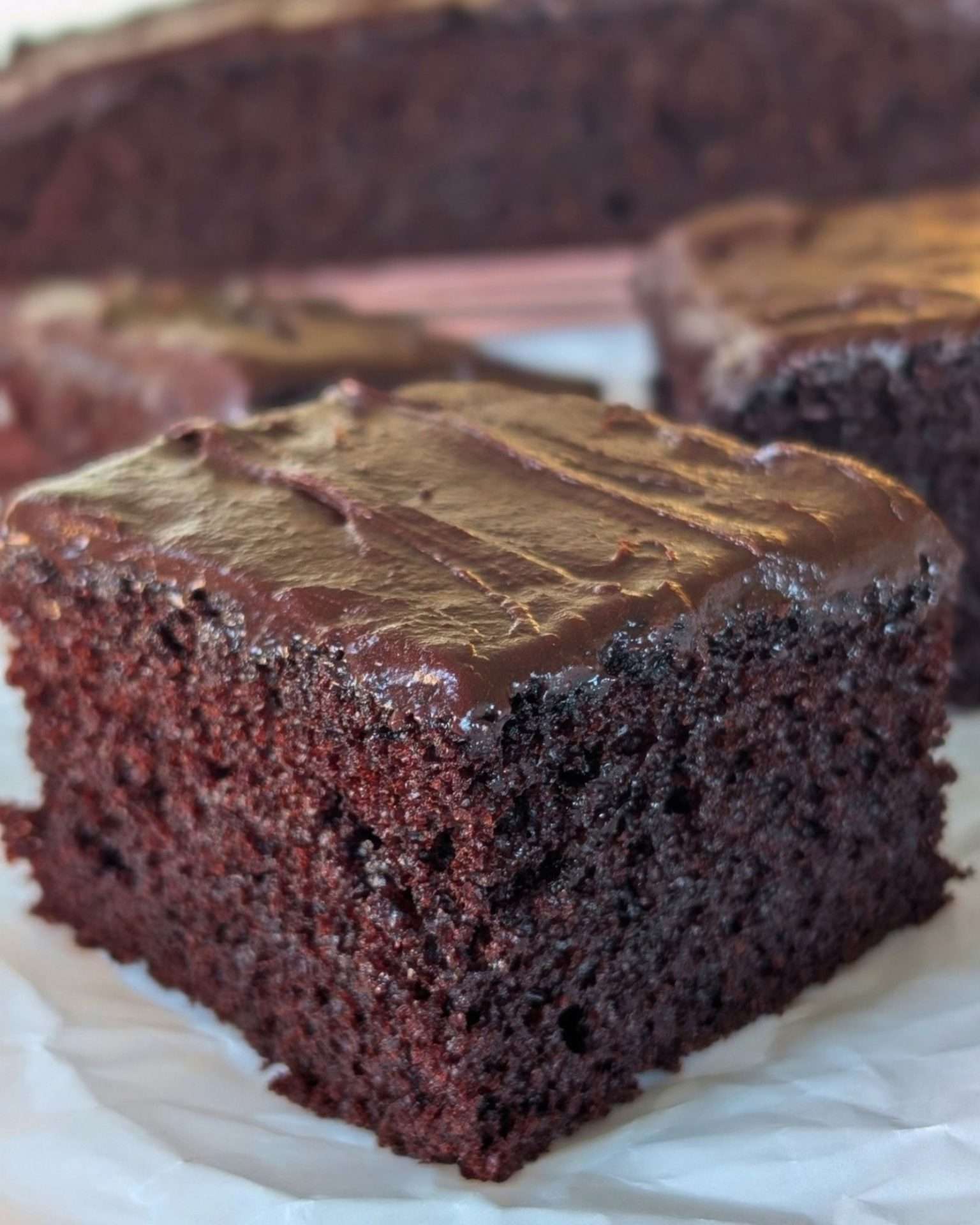
This stir-and-bake chocolate slab cake is what I make when a proper generous chocolate cake is required. Everything is stirred together in one bowl, poured into a large rectangular tin and finished with a thick layer of chocolate fudge icing. It is soft, rich and deeply chocolatey, with enough slices to handle birthdays, school celebrations, afternoon tea or a family gathering.
The combination of cocoa, brown sugar, sour cream, oil and a little melted butter gives the cake a tender, moist crumb without making it heavy or greasy, and hot water deepens the chocolate flavour.
This is also a useful recipe when you want the ease of a tray bake but the soft texture of a celebration cake. Add sprinkles and it is party-ready. Leave the top glossy and plain and it works just as well with a cup of tea. For more low-fuss chocolate baking, try my double choc orange muffins, or use a few very ripe bananas in my banana cake.
A Big No-Mixer Chocolate Cake
Slab cakes, also called sheet cakes, are baked in a wide rectangular tin rather than round layer tins. The shallower batter cooks relatively quickly and produces plenty of neat squares, which makes this style of cake particularly handy for sharing. There is no levelling, splitting or stacking.
The stir and bake cake method keeps the process simple, but the order still matters. The dry ingredients are whisked first so the cocoa and raising agents are spread evenly through the flour. The room-temperature wet ingredients are then stirred in, followed by the hot water. Adding the hot liquid last helps the cocoa dissolve and develop a fuller flavour while keeping the batter easy to mix by hand.
The batter will look much thinner than a butter cake batter. That is intentional. Resist the urge to add flour. The extra liquid becomes part of the cake’s soft texture once it is baked, and a fluid batter is exactly what you should expect here.
What Gives This Easy Chocolate Slab Cake Its Soft Crumb?
This chocolate sheet cake uses oil and butter because they do slightly different jobs. Oil stays fluid as the cake cools, helping the crumb remain soft for several days. Butter brings flavour and a little richness. Using a modest amount of each gives you the benefit of both without leaving the cake oily.
Sour cream adds body, moisture and gentle acidity. That acidity works with the bicarb soda, while the baking powder provides additional lift. Full-cream milk loosens the mixture and softens the crumb, and the eggs give the cake enough structure to hold together when cut.
Both white and brown sugar are useful here. White sugar provides sweetness without adding heaviness, while brown sugar holds onto moisture and brings a mild caramel note. The cake is still unmistakably chocolate, but its flavour is rounder and its texture stays softer than it would with white sugar alone.
Dutch-process cocoa gives the cake its dark colour and smooth chocolate flavour. It is less sharp than natural cocoa and works especially well in a cake with hot water (or coffee) and fudge icing. Because this recipe uses both baking powder and bicarb soda alongside sour cream, the raising does not depend on the cocoa being acidic.
Ingredients For A Stir-And-Bake Chocolate Slab Cake
Plain flour gives the cake enough structure while keeping the crumb tender. Measure it by weight if possible.
Dutch-process cocoa powder creates a dark colour and a mellow, full chocolate flavour. Break up any firm lumps before mixing, or sift the cocoa with the flour.
Baking powder and bicarb soda work together to lift the fairly wet batter. Check that both are within date.
White sugar and light brown sugar sweeten the cake and keep it moist. Press out any hard lumps in the brown sugar while whisking the dry ingredients.
Full-cream milk and sour cream add moisture and richness. Room-temperature ingredients blend into the batter more easily and reduce the risk of the melted butter firming into little flecks.
Vegetable or canola oil keeps the cake soft after refrigeration. Choose a neutral oil rather than olive oil, which can compete with the chocolate flavour.
Unsalted butter adds flavour. Melt it first, then let it cool slightly so it does not begin cooking the eggs on contact.
Eggs bind the batter and provide structure. Large eggs at room temperature are best.
Vanilla extract rounds out the cocoa flavour. Use extract rather than vanilla essence if you have it, but this cake will not collapse into despair if essence is what is in the cupboard.
Hot water (or hot coffee) blooms the cocoa and loosens the batter. The hot – not boiling – liquid gives the chocolate a greater depth.
For the icing, you will need melted butter, unsweetened cocoa powder, sifted icing sugar, thickened cream, vanilla and salt. Chocolate chips or sprinkles are optional, although sprinkles are a highly efficient way of announcing that a cake is intended for a birthday.
How To Make Chocolate Slab Cake
Step one: Prepare the tin and oven. Heat the oven and grease and line the slab tin. Give the oven enough time to reach temperature before the batter goes in.
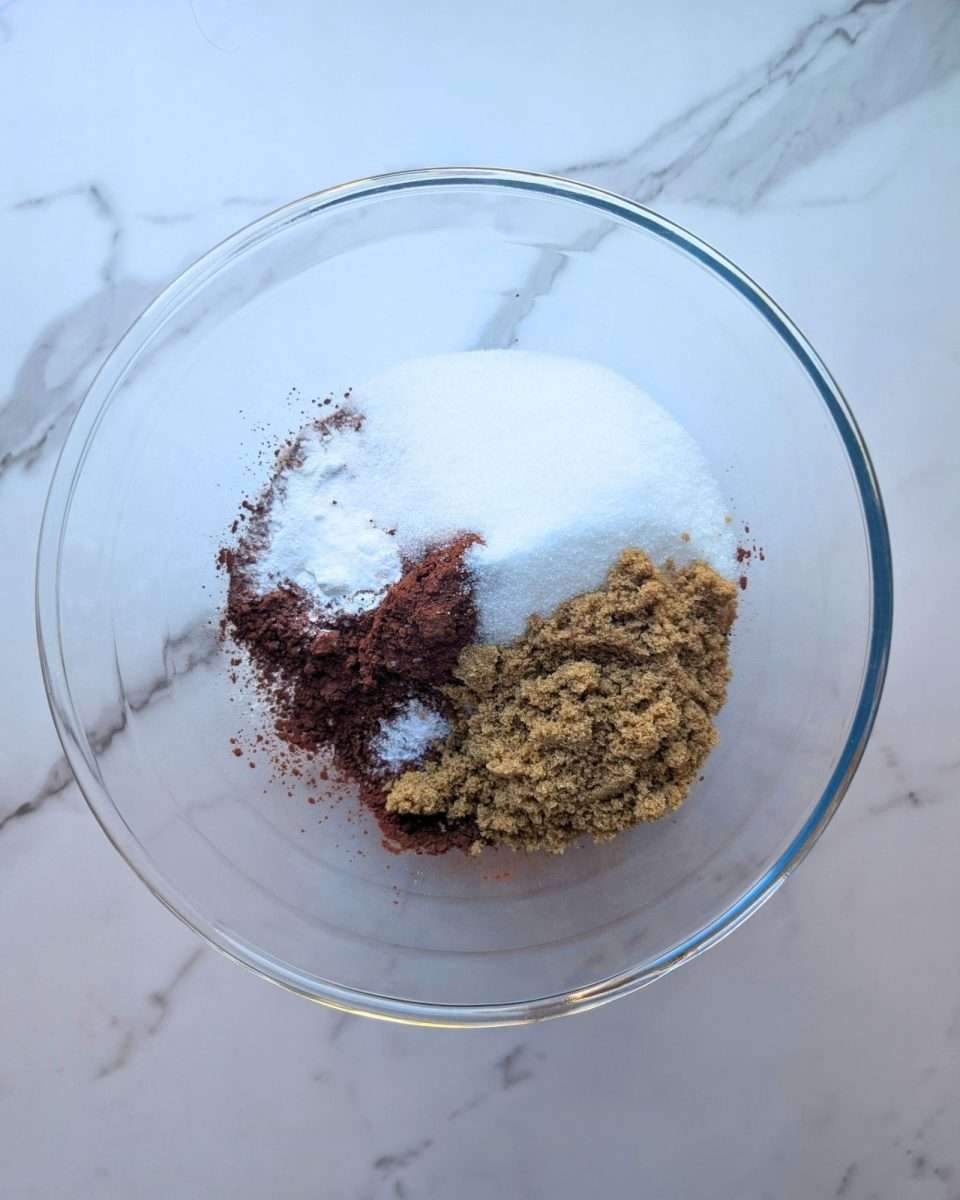
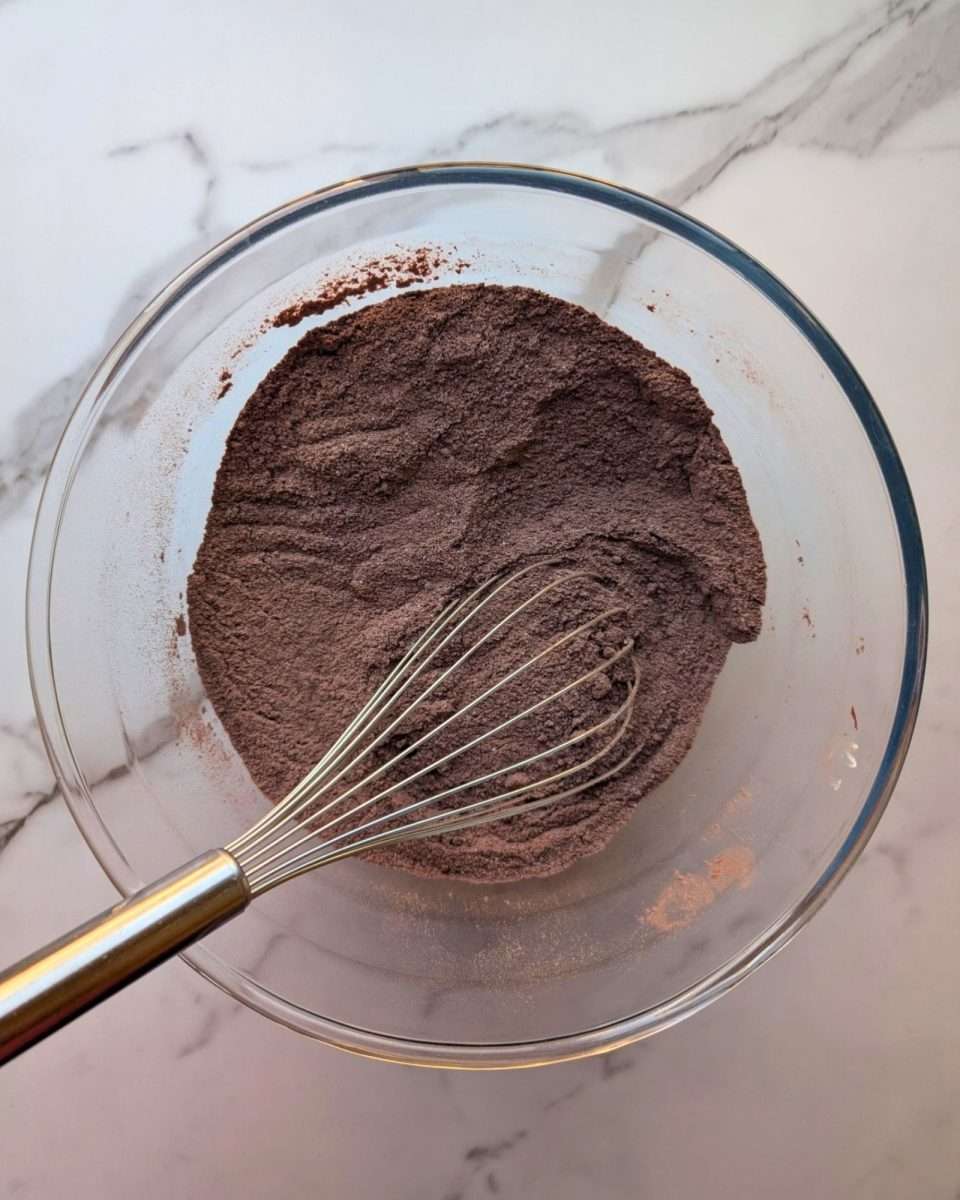
Step two: Combine the dry ingredients. Place the flour, cocoa, baking powder, bicarb soda, salt and both sugars in a large bowl. Whisk thoroughly, pressing out lumps of brown sugar and cocoa. This spreads the raising agents evenly and helps prevent pale flour pockets in the finished slab cake.
Step three: Add the room-temperature ingredients. Make a well in the centre, then add the milk, sour cream, oil, slightly cooled butter, eggs and vanilla. Stir gently, drawing the dry ingredients in from the sides, until the batter is mostly combined. A few streaks are fine at this stage because it will be mixed again when the hot liquid is added.
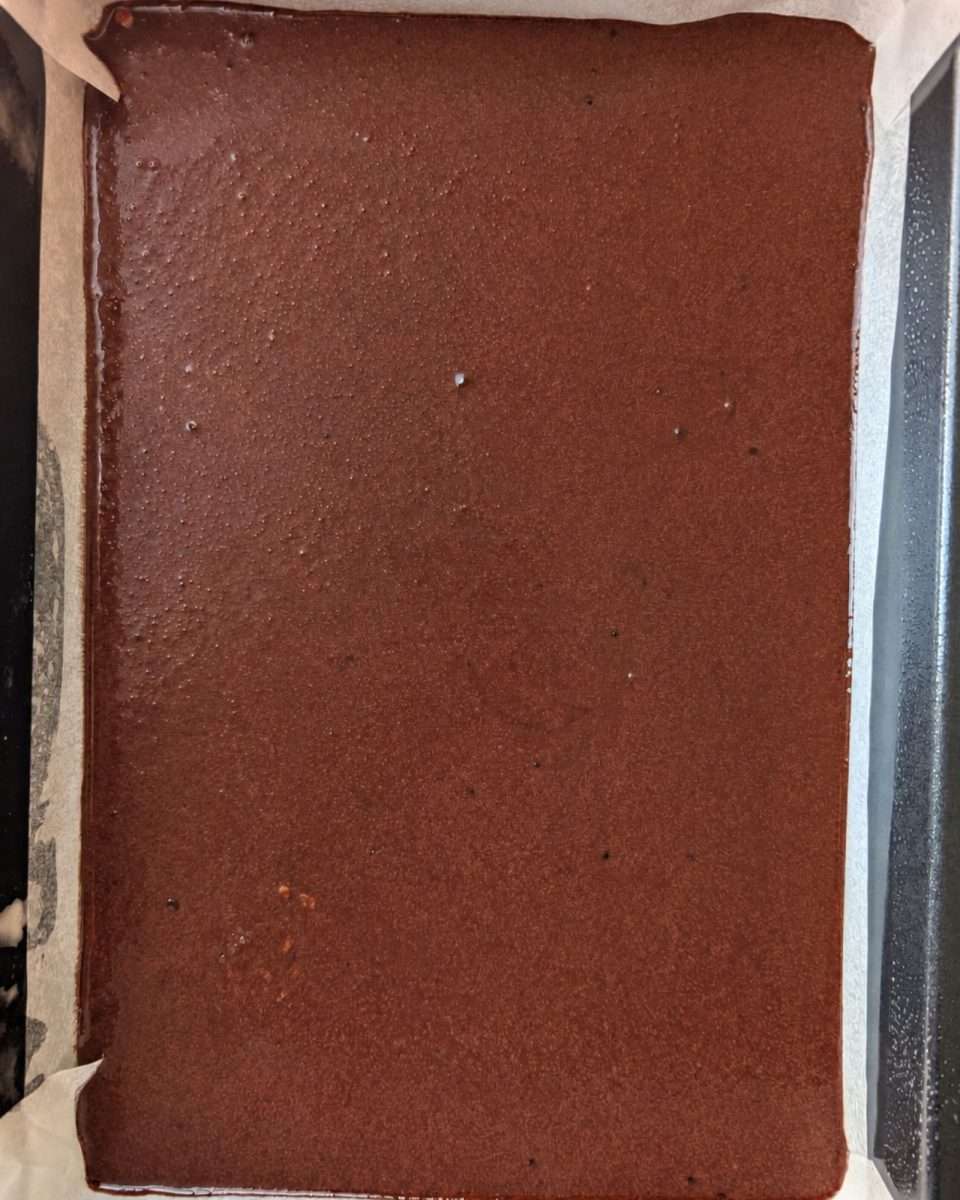
Step four: Stir in the hot water (or coffee). Pour in the hot (not boiling) water gradually while stirring. The batter will loosen considerably and should finish smooth, glossy and quite fluid. Scrape the base and sides of the bowl so no dry mixture is hiding underneath, but stop stirring as soon as everything is evenly combined.
Step five: Fill the tin. Pour the batter into the prepared tin and gently tap it against the bench a couple of times. This releases large air pockets without knocking out all the lift.
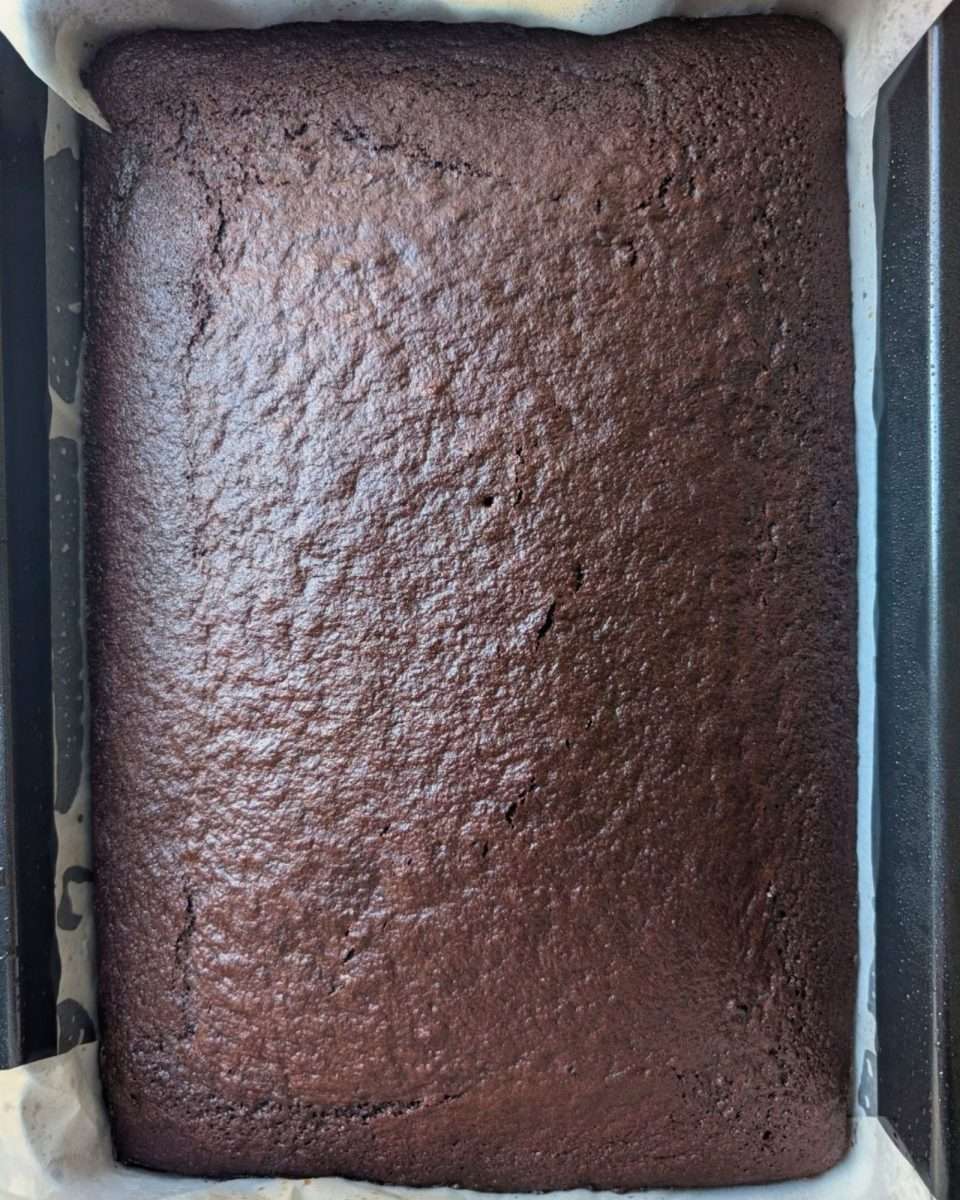
Step six: Bake carefully. Bake until the centre springs back after a light touch and a skewer inserted in the middle comes out with a few moist crumbs but no wet batter. Begin checking at the earliest suggested time. Chocolate crumbs can make a skewer look damp, so check the centre of the cake rather than relying on colour.
Step seven: Cool completely. Leave the slab cake in the tin for 10-15 minutes before transferring to a rack until fully cooled. A warm cake will melt the fudge icing, sending it towards the edges in a slow but steady stream. If time allows, cool the cake at room temperature rather than placing it in the fridge, where an uncovered cake can dry out.
Easy Variations For The One-Bowl Chocolate Cake
Make it with coffee. Replace the hot water with the same amount of hot coffee. The cake will have a slightly deeper chocolatey flavour.
Add chocolate chips. Fold dark or milk chocolate chips through the batter just before it goes into the tin. Tossing them in a little flour can help prevent them sinking, although the thin batter means some movement is still likely.
Use a different topping. Chocolate buttercream, cream cheese icing or a simple dusting of icing sugar can replace the fudge icing. A ganache topping would be richer and will set more firmly when chilled.
Turn it into a celebration cake. Cover the icing with sprinkles, mini chocolate pieces or chopped chocolate bars. Candles fit neatly across the broad surface.
Add orange. Stir finely grated orange zest into the batter and replace a small portion of the icing cream with orange juice. Do not add a large amount of juice to the cake batter, as changing the liquid and acidity can affect the bake. If you like the idea of this flavour combo you can try my chocolate orange cake.
Smooth Chocolate Fudge Icing
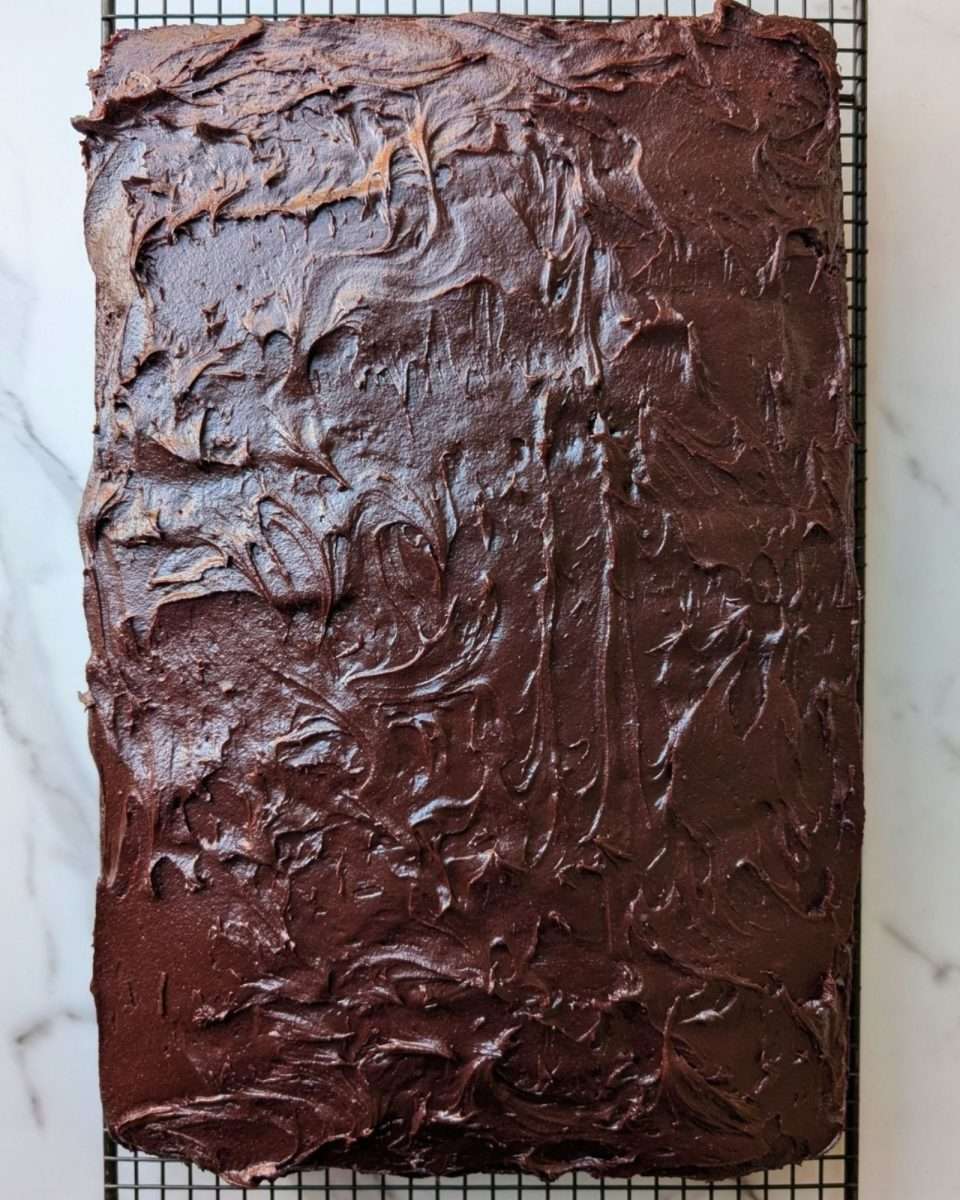
This icing sits between a buttercream and a pourable glaze. It should be thick enough to stay on the cake but soft enough to spread without pulling at the crumb.
Stir the melted butter and cocoa together first. This removes cocoa lumps and creates a smooth chocolate base. Add the sifted icing sugar, vanilla and salt, then mix in most of the cream. Add the remaining cream gradually, and only enough for the icing to reach a thick, spreadable consistency. You may need all of it, particularly on a cool day, but adding it in stages gives you much more control.
If the icing is too thick, add extra cream a teaspoon at a time. If it becomes too loose, stir in a little more sifted icing sugar. Spread it over the completely cooled cake with an offset spatula or the back of a spoon. Swirls are welcome.
Add chocolate chips, curls or sprinkles while the icing is still soft so they stick. For clean slices, allow the icing to settle before cutting and wipe the knife between cuts.
Easy Chocolate Slab Cake FAQs
Can I use hot coffee instead of hot water?
Yes. Use the same quantity of hot coffee. Coffee slightly deepens the cocoa flavour but should not make the cake taste strongly of coffee; water produces a slightly lighter chocolate flavour.
Does stir-and-bake mean I can mix everything at once?
Not quite. The chocolate sheet cake method is still very easy, but combining the dry ingredients first distributes the cocoa and raising agents properly. Add the room-temperature wet ingredients next, then stir in the hot coffee last.
Why is my chocolate slab cake batter so thin?
The batter is meant to be fluid. Hot water and the other wet ingredients provide the moisture needed for the soft crumb. Do not add extra flour unless you have discovered a genuine measuring error.
Can I make this slab cake without an electric mixer?
Yes. A hand whisk and spatula are all you need. In fact, mixing by hand makes it easier to stop as soon as the batter is combined.
Can I bake the slab cake in a different-sized tin?
A modest change may work, but it will alter the depth and baking time. Avoid using a tin with a substantially smaller capacity because the batter may overflow. A larger tin will create a thinner cake, so begin checking it earlier.
Why did the centre of my slab cake sink?
The most common causes are underbaking, opening the oven too early, inaccurate raising-agent measurements or overmixing. Check that the centre springs back and that a skewer shows moist crumbs rather than wet batter before removing the cake from the oven.
Can I make the chocolate sheet cake ahead?
Yes. Bake the cake the day before, cool it completely and keep it well covered. Add the icing on the day of serving, or ice it ahead and refrigerate if the weather is warm.
Can chocolate slab cake be frozen?
Yes. It freezes best without the icing, either whole or cut into portions. Wrap it well and freeze for up to three months, then thaw at room temperature before icing or serving.
Feedback and More: What did you think of the chocolate cake with fudge icing? Select a star rating ⭐⭐⭐⭐⭐ or leave a comment below to let me know. Cheers, Elby!
If you enjoyed this recipe, you might like some of my other tender cakes. For more tasty ideas and new recipes from The Tasteful Pantry, join me on Instagram, Facebook and Pinterest.
Stir-and-Bake Chocolate Slab Cake
*Note: Adjusting servings will not adjust the ‘light grey’ quantities
Ingredients
Cake
- 240 grams flour - plain
- 65 grams cocoa powder - Dutch-process
- 2 tsp baking powder
- ½ tsp bicarb soda
- ¾ tsp salt
- 250 grams white sugar
- 100 grams light brown sugar
- 150 ml full-cream milk - at room temperature
- 80 grams sour cream - at room temperature
- 90 ml vegetable oil - or canola oil
- 40 grams unsalted butter - melted and slightly cooled
- 3 large eggs - at room temperature
- 2 tsp vanilla extract
- 200 ml hot water - or hot strong coffee, not boiling
Chocolate fudge icing
- 75 grams unsalted butter - melted
- 40 grams cocoa powder - unsweetened
- 250 grams icing sugar - sifted
- 60 ml thickened cream - at room temperature
- 1 tsp vanilla extract
- ⅛ tsp salt
- chocolate chips or sprinkles - optional
Instructions
- Heat the oven to 180°C conventional or 160°C fan-forced. Grease and line a 23 × 33 cm cake tin, leaving enough baking paper extending over two sides to lift out the cake.
- Place the flour, cocoa, baking powder, bicarb soda, salt and both sugars in a large mixing bowl. Whisk until evenly combined, breaking up any lumps of brown sugar or cocoa.
- Make a well in the centre. Add the milk, sour cream, oil, melted butter, eggs and vanilla. Stir gently until mostly combined.
- Gradually add the hot water, stirring just until the batter is smooth and evenly mixed. The batter should be quite fluid.
- Pour the batter into the prepared tin and gently tap the tin against the bench once or twice to release any large air bubbles.
- Bake for 25-30 minutes, checking at 25 minutes. The cake is ready when the centre springs back gently and a skewer comes out with a few moist crumbs but no wet batter.
- Leave the cake to cool for 10 minutes in the tin before transferring to a rack. Cool completely before icing.
Make the icing
- Stir the melted butter and cocoa together until smooth.
- Add the icing sugar, vanilla, salt and about three-quarters of the cream. Stir until smooth.
- Add the remaining cream a little at a time until the icing is thick but easily spreadable. If it is already soft enough, you may not need every drop.
- Spread the icing over the completely cooled cake. Add chocolate chips or sprinkles, if using, before the icing sets.
Nutrition
*Nutrition and calorie figures are estimates only.